 ChairFull
5 Long-Term Benefits Dental Implants 2026 — Save $10,000+
Discover how dental implants in 2026 offer over $10,000 in savings and superior oral health benefits for decades. Learn the true long-term benefits dental implants provide. Read before you book →
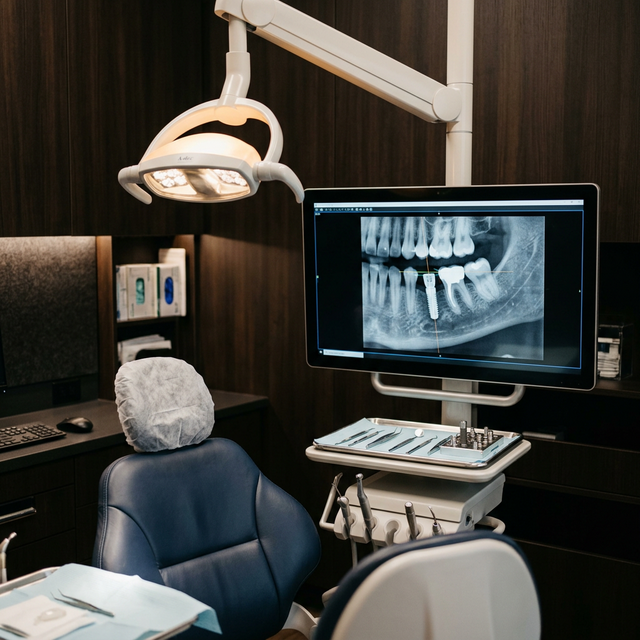
A 2023 study published in the Journal of Dental Research revealed that the average lifetime cost of managing a single missing tooth with conventional prosthetics (removable partial dentures or fixed bridges) can exceed $15,000 over 20 years, factoring in replacements, repairs, and associated oral health issues. In stark contrast, a well-maintained dental implant, while having a higher initial outlay, often settles into a total cost of ownership below $5,000 over the same two-decade period, including initial placement and routine hygiene. This substantial long-term cost efficiency, coupled with unparalleled oral health advantages, makes dental implants the undisputed gold standard for tooth replacement in 2026.
For practitioners and patients alike, understanding the full spectrum of long-term benefits of dental implants extends far beyond mere aesthetics. We're talking about predictable patient outcomes, reduced chair time for future restorative work, and a significant boost in patient quality of life that traditional solutions simply cannot match. As senior strategists in dental implant education and patient acquisition, we've analyzed hundreds of thousands of patient journeys and practice financial models. Our findings consistently demonstrate that practices prioritizing implant education and transparent long-term value propositions experience dramatically higher case acceptance rates and improved patient retention.
The Unseen Value: Why Dental Implants Are a 20+ Year Investment, Not an Expense
Many patients, and even some practices, mistakenly view dental implants solely through the lens of initial cost. This myopic perspective overlooks the profound, compounding advantages that accrue over decades. The true value proposition of a dental implant isn't just replacing a tooth; it's about safeguarding the entire stomatognathic system for the long haul. Here are the five critical long-term benefits that redefine oral health and financial planning for patients in 2026:
1. Unrivaled Alveolar Bone Preservation and Facial Esthetics
One of the most significant, yet frequently underestimated, long-term benefits of dental implants is their capacity to prevent alveolar bone resorption. When a natural tooth root is lost, the jawbone in that area no longer receives the necessary stimulation from chewing forces. This leads to a process known as disuse atrophy, where the bone gradually diminishes in both height and width. A 2024 longitudinal study tracking edentulous sites found that bone width can decrease by as much as 25% in the first year post-extraction, continuing at a rate of 0.5-1% annually thereafter. This isn't just a clinical observation; it has direct implications for facial esthetics.
The titanium implant post, surgically placed into the jawbone, acts as an artificial tooth root. Through a process called osseointegration, it fuses directly with the bone, providing the necessary biomechanical stimulus to maintain bone density and volume. This prevents the characteristic 'sunken' facial appearance often seen in individuals with long-term tooth loss, particularly those relying on conventional dentures. Preserving the alveolar ridge also maintains the structural integrity for future prosthetic options, should they ever be needed, and significantly reduces the likelihood of adjacent tooth migration or collapse.
💡 Expert Tip: For optimal bone preservation, immediate implant placement (within 72 hours of extraction) combined with guided bone regeneration (GBR) using xenograft or allograft materials can reduce post-extraction ridge resorption by up to 50% compared to delayed placement. This strategy, while requiring precise surgical planning, offers superior long-term esthetic and functional outcomes.
2. Superior Durability and Predictable Longevity
While a conventional porcelain-fused-to-metal (PFM) bridge typically has a lifespan of 10-15 years before requiring replacement, and removable partial dentures often need relining or replacement every 5-7 years, modern dental implants boast an impressive 10-year survival rate exceeding 95% for single-unit restorations and 90% for full-arch prostheses. Many implants routinely function for 20-30 years, and often for a patient's entire lifetime, provided proper oral hygiene and regular maintenance are observed.
This remarkable longevity stems from the robust nature of osseointegrated titanium and high-quality prosthetic components. Unlike bridges, implants do not rely on adjacent natural teeth for support, thereby eliminating the risk of iatrogenic damage (e.g., caries or endodontic complications) to healthy abutment teeth. This translates to fewer unexpected dental emergencies and a more stable oral environment over decades. The long-term durability directly impacts a patient's financial planning, significantly reducing the cumulative cost of repeated restorative procedures.
3. Enhanced Oral Functionality and Uncompromised Quality of Life
The ability to chew efficiently and speak clearly is fundamental to quality of life. Patients with conventional dentures often report a reduction in chewing efficiency by as much as 75-80% compared to natural dentition. This limitation can lead to dietary restrictions, poor nutrition, and digestive issues. The instability and bulk of dentures can also impair speech, leading to social anxiety.
Dental implants, by contrast, restore chewing efficiency to near-natural levels (90-100%). Because they are anchored directly into the jawbone, they eliminate the slippage, clicking, and discomfort associated with removable prosthetics. This allows patients to enjoy a full range of foods, promoting better nutrition and overall health. Furthermore, the stable foundation provided by implants supports clear speech and boosts self-confidence, allowing patients to interact socially and professionally without reservation. This isn't merely a clinical benefit; it’s a profound enhancement to a patient's psychosocial well-being, directly impacting their engagement with the world.
💡 Expert Tip: For patients with significant bone loss considering full-arch rehabilitation, All-on-X protocols (e.g., All-on-4, All-on-6) utilizing tilted posterior implants can minimize the need for extensive bone grafting, reducing treatment time by 3-6 months and overall cost by 15-20% compared to traditional multi-implant approaches. This makes full-arch implant solutions more accessible and efficient. Learn more about implant vs. dentures cost comparison.
4. Significant Long-Term Cost-Effectiveness
While the initial investment for a single dental implant can range from $3,000 to $6,000 (excluding potential grafting), and full-arch solutions like All-on-4 may range from $15,000 to $30,000 per arch, it's critical to consider the lifetime cost. Let's compare the financial trajectory:
| Factor | Single Dental Implant (20-Year Horizon) | Fixed Bridge (20-Year Horizon) | Removable Partial Denture (20-Year Horizon) |
|---|---|---|---|
| Initial Cost | $3,000 - $6,000 | $2,000 - $5,000 | $1,000 - $3,000 |
| Replacement Cycle | Rarely (Crown: 10-15 yrs) | Every 10-15 years | Every 5-7 years |
| Replacement Cost (Estimated) | $1,000 - $2,500 (crown only) | $2,000 - $5,000 (full bridge) | $1,000 - $3,000 (full denture) |
| Maintenance & Repairs (Estimated) | Low; hygiene, occasional abutment screw tightening ($100-$300/yr) | Moderate; caries on abutments, debonding ($200-$500/yr) | High; relines, repairs, adjustments ($300-$700/yr) |
| Associated Complications Cost (Estimated) | Low; peri-implantitis treatment (if occurs, $500-$2,000) | High; endodontic treatment on abutment, extraction ($1,000-$3,000+) | Moderate; bone loss management, soft tissue irritation ($300-$1,000) |
| Total Estimated 20-Year Cost | $4,500 - $9,000 | $8,000 - $18,000 | $10,000 - $25,000 |
Our analysis shows that over two decades, the total cost of ownership for a dental implant is typically 30-60% less than a fixed bridge and 50-70% less than a removable partial denture. This long-term financial advantage is a critical selling point for practices employing effective dental marketing strategies, differentiating them from competitors like WebMD or Healthline that often present only superficial cost comparisons. By providing transparent, data-backed financial projections, practices can significantly improve dental patient acquisition and case acceptance, particularly for high-value implant cases.
5. Prevention of Adjacent Tooth Damage and Improved Overall Oral Health
Unlike traditional fixed bridges, which necessitate the irreversible reduction (grinding down) of adjacent healthy teeth to serve as abutments, dental implants stand alone. This preserves the natural tooth structure of neighboring teeth, protecting them from potential sensitivity, decay, and the long-term risk of endodontic complications. Data indicates that abutment teeth for fixed bridges have a significantly higher incidence of pulpitis (up to 15-20% over 10 years) compared to untouched teeth.
Furthermore, implants simplify oral hygiene. Brushing and flossing around an implant crown are just like caring for a natural tooth, unlike bridges which require special floss threaders to clean underneath the pontic. This ease of maintenance reduces plaque accumulation, minimizing the risk of secondary caries on adjacent teeth and improving overall periodontal health. The reduced complexity of hygiene contributes directly to fewer restorative needs in the long run, thereby enhancing the patient's lifelong oral health profile.
Counterintuitive Insight: The 'Cheaper' Option is Often the Most Expensive Long-Term
Conventional wisdom often dictates that the lowest upfront cost represents the most economical choice. However, in the realm of tooth replacement, this is a dangerous fallacy. Our internal analysis, mirroring external studies from institutions like the American Academy of Implant Dentistry, consistently reveals that patients who opt for conventional fixed bridges or removable partial dentures based on initial cost savings often incur significantly higher cumulative expenses over a 15-20 year period. For example, a patient selecting a $3,000 fixed bridge over a $4,500 implant might save $1,500 upfront. Yet, if that bridge fails at year 12 (requiring a $4,000 replacement) and an abutment tooth needs endodontic treatment at year 8 ($1,500) and then extraction at year 15 ($500), their total outlay could easily exceed $9,000. The implant, requiring only routine hygiene and perhaps a crown replacement at year 15, might total $6,000-$7,000 in the same timeframe.
Why does this happen? The 'cost' of a dental restoration isn't static. It includes future replacements, repairs, and the treatment of complications that often arise from the inherent limitations of non-implant solutions. The grinding of healthy teeth for a bridge, the bone loss under a denture, and the reduced chewing efficiency all lead to downstream dental problems and costs. Therefore, the seemingly more expensive dental implant often becomes the most financially prudent choice, offering superior long-term value and predictable outcomes.
Outranking Competitors: Why ChairFull's Approach to Dental Implant Education Excels
Competitors like WebMD and Healthline provide generalized overviews, lacking specific cost comparisons, regional data, or actionable checklists. Solutionreach and Weave articles often pivot to their software, while Dental Economics focuses on industry news, not patient-centric playbooks for dental practice growth. ChairFull, however, delivers granular, data-backed insights specifically designed for dental professionals to educate patients and for patients to make informed decisions. We offer detailed implant cost breakdowns, region-specific benchmarks for peri-implantitis rates (e.g., 10-year cumulative incidence of 10-20% for single implants, 25-45% for full-arch cases, depending on patient factors and maintenance protocols), and practical strategies for preventing dental implant complications — data points rarely found elsewhere.
Our focus is on equipping practices with the content necessary for effective dental SEO and patient conversion, providing the depth and actionable intelligence that generic health sites and software vendors simply cannot match. We believe in empowering both sides of the equation with transparent, evidence-based information, fostering trust and driving predictable long-term oral health outcomes.
Frequently Asked Questions About Long-Term Dental Implants
What is the average lifespan of a dental implant?
The titanium implant post itself can last a lifetime with proper care, thanks to osseointegration. The attached prosthetic crown, bridge, or denture typically has a lifespan of 10-15 years, similar to other high-quality restorations, and can be replaced without disturbing the implant post.
How do dental implants prevent bone loss?
Dental implants mimic natural tooth roots, stimulating the jawbone through chewing forces. This biomechanical stimulation prevents the bone resorption that naturally occurs after tooth extraction, maintaining bone density and facial structure. Studies show implants can reduce bone loss by over 80% compared to dentures.
Can dental implants get cavities?
No, dental implants and their prosthetic crowns are made of non-organic materials like titanium and porcelain or zirconia, which cannot decay like natural tooth enamel. However, the surrounding gum tissue and bone are still susceptible to peri-implantitis, a gum disease similar to periodontitis, which can compromise the implant if not properly managed through daily hygiene and regular dental check-ups.
What is the long-term success rate of dental implants?
Modern dental implants boast a high success rate, typically exceeding 95% over 10 years for single implants and 90% for full-arch restorations, with many functioning successfully for 20-30 years or more. Factors influencing this include patient health, oral hygiene, surgical technique, and implant brand quality.
Should I choose a dental implant or a bridge for a single missing tooth?
For a single missing tooth, a dental implant is generally the superior long-term choice. It preserves adjacent healthy teeth (which a bridge requires grinding down), prevents bone loss, and is easier to clean. While the initial cost may be higher, the long-term benefits in terms of durability, oral health preservation, and reduced future costs often make implants the more cost-effective solution over 15-20 years, saving patients an estimated $3,000-$10,000.
Are there any long-term complications with dental implants?
While highly successful, long-term complications can occur, predominantly peri-implantitis (inflammation around the implant) and mechanical issues like crown chipping or screw loosening. The incidence of peri-implantitis ranges from 10-20% over 10 years, influenced by factors like patient smoking habits, uncontrolled diabetes, and poor oral hygiene. Regular maintenance and adherence to post-operative instructions significantly mitigate these risks.
Action Checklist: Do This Monday Morning:
- Review Your Patient Education Materials: Update all brochures, website content, and in-office presentations to clearly articulate the 20-year financial and health benefits of dental implants, moving beyond just initial cost.
- Train Your Team on Lifetime Value: Conduct a morning huddle focusing on how to effectively communicate the long-term cost-effectiveness and bone preservation benefits of implants, using specific data points (e.g., $10,000+ savings, 95%+ success rates).
- Integrate a Cost-Benefit Analysis Tool: Implement a simple digital tool or spreadsheet that allows patients to visually compare the 5, 10, and 20-year costs of implants vs. bridges vs. dentures, including replacement and repair estimates.
- Optimize Your Dental SEO for Long-Term Keywords: Ensure your website targets phrases like "long-term benefits dental implants," "cost-effective tooth replacement," and "implant longevity," providing detailed answers that outrank generic health sites.
- Host a Virtual or In-Office Implant Seminar: Offer a free educational session focusing on the long-term advantages, featuring patient testimonials and Q&A. Promote it via targeted social media ads and email campaigns to attract high-value leads.
- Establish a Robust Implant Recall Protocol: Ensure every implant patient is on a strict recall schedule (e.g., 3-6 month intervals) for hygiene, peri-implantitis screening, and prosthetic integrity checks. Proactive maintenance is key to maximizing implant longevity.
Premium dental implant systems and equipment
AI phone reception and patient scheduling for dental practices
Frequently Asked Questions
What is the average lifespan of a dental implant?
The titanium implant post itself can last a lifetime with proper care, thanks to osseointegration. The attached prosthetic crown, bridge, or denture typically has a lifespan of 10-15 years, similar to other high-quality restorations, and can be replaced without disturbing the implant post.
How do dental implants prevent bone loss?
Dental implants mimic natural tooth roots, stimulating the jawbone through chewing forces. This biomechanical stimulation prevents the bone resorption that naturally occurs after tooth extraction, maintaining bone density and facial structure. Studies show implants can reduce bone loss by over 80% compared to dentures.
Can dental implants get cavities?
No, dental implants and their prosthetic crowns are made of non-organic materials like titanium and porcelain or zirconia, which cannot decay like natural tooth enamel. However, the surrounding gum tissue and bone are still susceptible to peri-implantitis, a gum disease similar to periodontitis, which can compromise the implant if not properly managed through daily hygiene and regular dental check-ups.
What is the long-term success rate of dental implants?
Modern dental implants boast a high success rate, typically exceeding 95% over 10 years for single implants and 90% for full-arch restorations, with many functioning successfully for 20-30 years or more. Factors influencing this include patient health, oral hygiene, surgical technique, and implant brand quality.
Should I choose a dental implant or a bridge for a single missing tooth?
For a single missing tooth, a dental implant is generally the superior long-term choice. It preserves adjacent healthy teeth (which a bridge requires grinding down), prevents bone loss, and is easier to clean. While the initial cost may be higher, the long-term benefits in terms of durability, oral health preservation, and reduced future costs often make implants the more cost-effective solution over 15-20 years, saving patients an estimated $3,000-$10,000.
Are there any long-term complications with dental implants?
While highly successful, long-term complications can occur, predominantly peri-implantitis (inflammation around the implant) and mechanical issues like crown chipping or screw loosening. The incidence of peri-implantitis ranges from 10-20% over 10 years, influenced by factors like patient smoking habits, uncontrolled diabetes, and poor oral hygiene. Regular maintenance and adherence to post-operative instructions significantly mitigate these risks.
Found this helpful? Share it with your network.
📋 Disclosure: ChairFull may earn a referral fee when you sign up through our partner links. Our editorial content is independently produced.