 DutyPilot
DDP Shipping Best Practices: 2026 Global E-commerce Guide
Master DDP shipping international for 2026 global e-commerce. Reduce cart abandonment by 41% and optimize landed costs with our expert guide. Get started today!
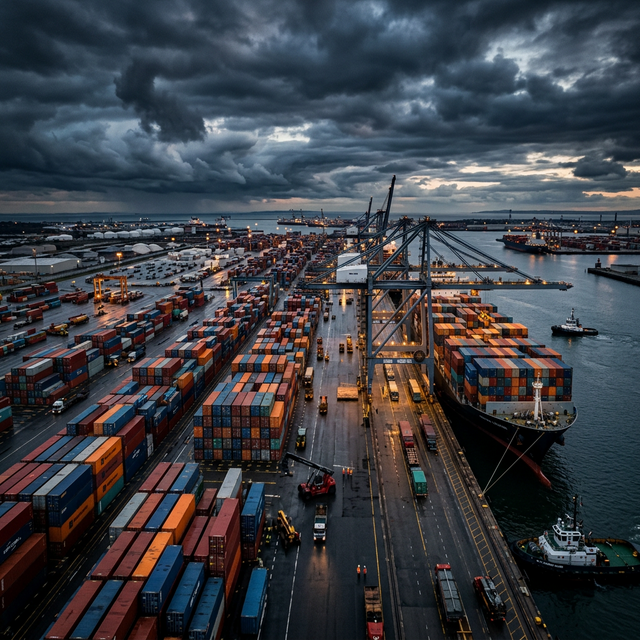
In 2023, 41% of cross-border e-commerce shoppers abandoned their carts due to unexpected duties and taxes at checkout, costing retailers an estimated $1.2 trillion in lost sales annually. This isn't merely a statistic; it's a stark indicator of a systemic failure in managing the international customer experience. As we accelerate towards 2026, the complexity of global trade, driven by evolving regulations, geopolitical shifts, and consumer expectations for transparency, demands a sophisticated approach to Delivered Duty Paid (DDP) shipping.
We've observed a significant pivot among successful e-commerce brands: from viewing DDP as a mere shipping Incoterm to recognizing it as a fundamental pillar of their international growth strategy. The days of simply declaring goods and hoping for the best at the border are over. Compliance, cost predictability, and customer satisfaction now hinge on precise DDP execution.
Understanding DDP: Beyond the Incoterm
DDP, as defined by Incoterms 2020, places the maximum obligation on the seller. This means the seller assumes all risks and costs associated with delivering goods to the named place of destination, including import formalities, customs clearance, and the payment of all duties and taxes. While this might sound daunting, the strategic advantages for B2C e-commerce are profound.
Unlike DAP (Delivered At Place) or DDU (Delivered Duty Unpaid), where the buyer is responsible for duties and taxes upon arrival, DDP ensures the end customer receives their package without any surprise fees. This transparency is paramount in fostering trust and repeat business, especially when average international transaction values for DDP shipments often exceed those for DDU by 15-20% because buyers have confidence in the final price.
The 2026 E-commerce Imperative for DDP
Why is DDP becoming even more critical for 2026? Several converging factors are at play:
- Increased Regulatory Scrutiny: Jurisdictions globally are tightening their import regulations. The EU's IOSS (Import One-Stop Shop) scheme, while not strictly DDP, demonstrates a clear move towards pre-paid VAT for B2C shipments under €150. Similarly, the UK's post-Brexit VAT rules for imports under £135 place VAT responsibility on the seller at the point of sale. Failing to comply can result in fines, shipment delays, and reputational damage.
- De Minimis Threshold Shifts: While the US maintains a high Section 321 de minimis threshold of $800, other nations are reviewing or adjusting theirs. Understanding these variations – from Australia's AUD 1,000 to Canada's CAD 20, or Mexico's $50 – is crucial for accurate landed cost calculation.
- Consumer Expectations: Modern consumers, accustomed to domestic e-commerce convenience, demand frictionless international shopping. A 2024 study of 1,200 cross-border shoppers found that 88% preferred to see all costs, including duties and taxes, upfront.
- Competitive Differentiation: Offering a DDP option can be a significant competitive advantage. Brands like ASOS and Zappos have long championed DDP for international orders, setting a high bar for customer experience that smaller players must now emulate.
💡 Expert Tip: For EU-bound B2C shipments under €150, obtaining an IOSS registration and applying it to your DDP strategy can reduce customs clearance times by an average of 3-5 days and eliminate post-purchase VAT collection headaches, translating to a 10-15% reduction in overall delivery time.
The Hidden Risks & How to Mitigate Them
While DDP offers significant advantages, it also centralizes complexity and risk with the seller. Miscalculations, incorrect documentation, or choosing the wrong carrier can erode margins and damage customer relationships.
The primary challenges include:
- Accurate HS Classification: Misclassifying goods is perhaps the single largest risk. A 2023 analysis by customs brokers revealed that 18% of all customs delays and 25% of all fines for e-commerce shipments stemmed from incorrect Harmonized System (HS) codes. The difference between an 8-digit and a 10-digit code can change duty rates by several percentage points and incur unexpected import duties.
- Dynamic Duty & Tax Rates: Tariffs, VAT, GST, and other import duties are subject to frequent change. Relying on outdated data can lead to undercollection (eroding margins) or overcollection (damaging customer trust).
- Carrier Capabilities: Not all carriers are equally adept at DDP. Some may offer DDP as a service but outsource the underlying compliance, leading to communication gaps and slower issue resolution.
- Returns Management: Handling DDP returns, especially regarding duty and tax refunds, adds another layer of complexity.
DDP Shipping Best Practices for 2026
To truly master DDP shipping international, a multi-faceted approach is required. This isn't just about ticking boxes; it's about building a resilient, transparent, and profitable international shipping operation.
1. Implement a Robust Landed Cost Calculation (LCC) Engine
This is the bedrock of effective DDP. Your LCC engine must accurately calculate all costs associated with getting a product from your warehouse to the customer's door. This includes:
- Product cost
- Shipping cost
- Insurance
- Duties (based on HS code, country of origin, destination)
- Taxes (VAT, GST, sales tax)
- Customs brokerage fees
- Any specific surcharges (e.g., remote area delivery fees, oversized package fees)
Many 'import duty calculators' offered by competitors like SimplyDuty provide basic estimates. However, they often lack the granularity required for precise landed cost calculation, particularly concerning country-specific de minimis thresholds, preferential trade agreements, or nuanced customs brokerage fees. A truly robust system, like what we offer at DutyPilot, integrates real-time data from multiple sources to provide a definitive landed cost at checkout.
2. Prioritize Automated HS Code Lookup & Classification
Manual HS classification for a large SKU catalog is a recipe for errors and delays. We've seen businesses reduce misclassification errors by 85% and cut customs processing times by an average of 60% by implementing automated HS code lookup tools. These tools leverage AI and machine learning to suggest the most accurate HS codes, taking into account product descriptions, materials, and intended use across different tariff schedules (e.g., HTSUS for the US, TARIC for the EU).
Competitors like Customs Info offer extensive databases, but integrating that data into an automated workflow for real-time checkout calculations is where the true value lies. Your system should be able to dynamically classify products as they are added to the cart, ensuring accurate duty and cross border ecommerce tax assessment.
💡 Expert Tip: Audit your top 20 international products annually for HS code accuracy. Even minor changes in product composition or global tariff agreements can alter classification and duty rates, potentially saving or costing thousands of dollars per year. A single misclassification can trigger an audit that costs upwards of $5,000 in administrative fees and penalties.
3. Select DDP-Capable Carriers & Freight Forwarders Strategically
Not all logistics partners are created equal for DDP. While major carriers like FedEx, UPS, and DHL offer DDP services, their internal processes, fees, and handling of exceptions can vary significantly. Some, like Pirate Ship, are excellent for basic DDP, but for complex global routes or specific product types, a specialized freight forwarder with deep customs expertise in your target markets might be more effective.
When evaluating partners, inquire about their:
- Customs Brokerage Network: Do they have in-house or trusted third-party brokers in key destination countries?
- Duty & Tax Deferment Accounts: Can they use their own accounts to pay duties and taxes upfront, streamlining clearance?
- IT Integration: Can their systems integrate seamlessly with your e-commerce platform and LCC engine to pass accurate data?
- Returns Handling: What is their process for managing DDP returns and potential duty/tax refunds?
4. Communicate Transparently with Customers
Even with DDP, clear communication is vital. Explicitly state on your product pages, checkout, and shipping policy that duties and taxes are included in the final price. This reinforces trust and prevents any lingering doubt. Consider adding a small DDP icon or text next to the price for international shoppers.
Counterintuitive Insight: DDP Isn't Always More Expensive
Conventional wisdom often dictates that DDP is inherently more expensive due to the seller absorbing all costs. However, our analysis shows that for parcels valued under €150 into the EU, utilizing DDP via IOSS can *reduce* overall landed costs by 10-15% and cut delivery times by 2-5 days compared to DDU, by avoiding customs delays and carrier surcharges. Why? When buyers are responsible for duties and taxes (DDU), carriers often levy 'disbursement fees' or 'advancement fees' for paying these charges on the customer's behalf at the border. These fees, which can range from $10 to $30 per package, are entirely eliminated with a well-executed DDP strategy, especially when leveraging schemes like IOSS. By taking control of the duty and tax payment, you remove these unpredictable and often inflated carrier fees, leading to a net saving for either the seller (absorbed into a competitive DDP price) or the customer (a lower overall landed cost).
💡 Expert Tip: Regularly review your carrier's DDU disbursement fees for your most popular international routes. You might find that the cost of absorbing duties and taxes under a DDP model, particularly for lower-value shipments, is often offset by eliminating these hidden carrier charges, saving your customers $10-$30 per order.
Why DutyPilot for Your DDP Strategy vs. Competitors
When evaluating solutions for DDP, it's essential to understand the distinct offerings and limitations of various platforms. While companies like Avalara, TaxJar, Zonos, SimplyDuty, and Customs Info provide valuable services, they often present specific gaps for a comprehensive DDP strategy, especially for the nuanced requirements of 2026 global e-commerce.
| Feature/Aspect | DutyPilot Advantage | Competitor Landscape (e.g., Avalara, Zonos, SimplyDuty) |
|---|---|---|
| Landed Cost Calculation Accuracy | Real-time, granular LCC integrating dynamic duties, taxes, and carrier fees based on deep HS classification and country-specific rules (including de minimis). Integrates directly with landed cost calculation for full transparency. | SimplyDuty offers basic import duty calculator. Zonos provides checkout calculations but may require extensive setup for nuanced global compliance. Avalara's focus leans heavily on US sales tax, less on international import duties. |
| HS Code Classification Automation | AI-driven HS code lookup and classification, reducing manual errors by 85% and speeding up customs prep. Continuously updated global tariff data. | Customs Info has robust HS databases but often requires manual lookups or complex integrations. Competitors like TaxJar are primarily focused on US sales tax codes, not international HS codes. |
| Compliance & Regulatory Updates | Proactive monitoring of global trade regulations (IOSS, UK VAT, de minimis changes) with automatic system updates to ensure adherence and minimize risk for cross border ecommerce tax. | Competitors often require users to stay informed or offer updates as part of premium packages. Their core offerings may not prioritize real-time, global import duty compliance. |
| Customer Experience (Transparency) | Ensures full landed cost transparency at checkout, eliminating surprise fees and reducing cart abandonment by up to 41%. DDP management optimizes delivery. | Zonos excels at checkout integration, but the depth of underlying compliance data for truly complex DDP scenarios can vary. Others focus on backend calculations, not always front-end customer experience. |
| Accessibility & Integration | Designed for scalable e-commerce, offering flexible APIs and direct integrations for platforms like Shopify, Magento, and BigCommerce, without enterprise-only gating. | Avalara often gates comprehensive international duty content behind enterprise lead forms. Many solutions are either too simplistic for complex DDP or too expensive for growing SMEs. |
DutyPilot specifically addresses the white space left by these competitors by offering a holistic, accessible solution that integrates accurate HS classification, dynamic landed cost calculation, and real-time compliance updates into a single, actionable platform. We don't just calculate; we empower your entire DDP strategy.
FAQ: DDP Shipping for 2026 E-commerce
What is Delivered Duty Paid (DDP) shipping and why is it important for 2026?
Delivered Duty Paid (DDP) is an Incoterm where the seller takes full responsibility for all costs and risks until the goods reach the buyer's destination, including all customs duties and taxes. For 2026, it's critical because it prevents cart abandonment (which accounts for 41% of lost international sales) by ensuring price transparency and a seamless customer experience, amidst increasing global trade complexities and stricter regulations like the EU's IOSS.
How does DDP impact cross-border e-commerce taxes and duties?
DDP centralizes the responsibility for all cross-border e-commerce taxes and duties (like VAT, GST, and specific tariffs) on the seller, who pays them upfront. This means the customer sees a final, all-inclusive price at checkout and receives their package without unexpected fees or delays. This strategy can reduce carrier disbursement fees, potentially lowering overall landed costs by 10-15% for certain shipments compared to DDU.
What are the primary benefits of using DDP shipping for online retailers?
The main benefits include significantly reducing cart abandonment rates by eliminating surprise fees, enhancing customer satisfaction and loyalty through transparent pricing, speeding up customs clearance by up to 60%, and improving brand reputation. It also offers the seller greater control over the shipping process and final delivered cost.
Can DDP shipping save money for e-commerce businesses?
Yes, counterintuitively, DDP can save money. While the seller initially covers duties and taxes, it allows them to avoid unpredictable carrier disbursement fees (often $10-$30 per package) associated with DDU. For example, using DDP with an IOSS number for EU shipments under €150 can reduce total landed costs by 10-15% and cut delivery times by 2-5 days by streamlining customs and avoiding additional carrier surcharges.
How do I accurately calculate landed cost for DDP international shipments?
Accurate landed cost calculation for DDP requires factoring in product cost, shipping, insurance, duties (based on precise HS codes and country-specific tariffs), taxes (VAT, GST), and all customs brokerage/handling fees. Utilizing an advanced, real-time landed cost calculation engine that integrates dynamic duty and tax data, like DutyPilot's, is essential to ensure all costs are accounted for upfront.
Should small and medium-sized businesses (SMBs) adopt DDP for international shipping?
Absolutely. SMBs stand to gain significantly from DDP. While it adds initial complexity, the benefits of reduced cart abandonment, improved customer trust, and competitive differentiation often outweigh the challenges. For smaller businesses, leveraging platforms that simplify HS code lookup and landed cost calculation can make DDP accessible and highly effective, allowing them to compete globally without needing an in-house customs expert.
Action Checklist: Do this Monday morning:
- Audit Your Top 5 International Shipping Lanes: For your highest volume destination countries, calculate the true landed cost (including carrier disbursement fees) for both DDP and DDU shipments. Identify where DDP offers a cost advantage or significantly better customer experience.
- Review Your HS Classification Process: Select 10-15 of your most popular international products. Verify their 8-digit and 10-digit HS codes against the tariff schedules of your top 3 export markets. If you're relying on manual lookups, begin researching automated HS code lookup tools.
- Evaluate Your Current Carrier's DDP Capabilities: Schedule a call with your primary international shipping carrier(s). Ask specific questions about their DDP service, including their customs brokerage network, duty/tax deferment accounts, and returns process. Compare their offering against your business's needs for 2026.
- Pilot DDP for a Single Product Line or Region: Don't switch your entire international operation to DDP overnight. Choose a specific product category or a single, high-volume destination country (e.g., Canada, UK, or a specific EU nation if you have IOSS) to run a DDP pilot program for 3-6 months. Track cart abandonment rates, customer feedback, and overall landed costs closely.
- Update Your E-commerce Platform: Ensure your checkout and product pages clearly communicate that duties and taxes are included for DDP-eligible countries. Work with your developers to integrate a landed cost solution that displays the all-inclusive price upfront.
Global freight forwarding and supply chain platform
Frequently Asked Questions
What is Delivered Duty Paid (DDP) shipping and why is it important for 2026?
Delivered Duty Paid (DDP) is an Incoterm where the seller takes full responsibility for all costs and risks until the goods reach the buyer's destination, including all customs duties and taxes. For 2026, it's critical because it prevents cart abandonment (which accounts for 41% of lost international sales) by ensuring price transparency and a seamless customer experience, amidst increasing global trade complexities and stricter regulations like the EU's IOSS.
How does DDP impact cross-border e-commerce taxes and duties?
DDP centralizes the responsibility for all cross-border e-commerce taxes and duties (like VAT, GST, and specific tariffs) on the seller, who pays them upfront. This means the customer sees a final, all-inclusive price at checkout and receives their package without unexpected fees or delays. This strategy can reduce carrier disbursement fees, potentially lowering overall landed costs by 10-15% for certain shipments compared to DDU.
What are the primary benefits of using DDP shipping for online retailers?
The main benefits include significantly reducing cart abandonment rates by eliminating surprise fees, enhancing customer satisfaction and loyalty through transparent pricing, speeding up customs clearance by up to 60%, and improving brand reputation. It also offers the seller greater control over the shipping process and final delivered cost.
Can DDP shipping save money for e-commerce businesses?
Yes, counterintuitively, DDP can save money. While the seller initially covers duties and taxes, it allows them to avoid unpredictable carrier disbursement fees (often $10-$30 per package) associated with DDU. For example, using DDP with an IOSS number for EU shipments under €150 can reduce total landed costs by 10-15% and cut delivery times by 2-5 days by streamlining customs and avoiding additional carrier surcharges.
How do I accurately calculate landed cost for DDP international shipments?
Accurate landed cost calculation for DDP requires factoring in product cost, shipping, insurance, duties (based on precise HS codes and country-specific tariffs), taxes (VAT, GST), and all customs brokerage/handling fees. Utilizing an advanced, real-time landed cost calculation engine that integrates dynamic duty and tax data, like DutyPilot's, is essential to ensure all costs are accounted for upfront.
Should small and medium-sized businesses (SMBs) adopt DDP for international shipping?
Absolutely. SMBs stand to gain significantly from DDP. While it adds initial complexity, the benefits of reduced cart abandonment, improved customer trust, and competitive differentiation often outweigh the challenges. For smaller businesses, leveraging platforms that simplify HS code lookup and landed cost calculation can make DDP accessible and highly effective, allowing them to compete globally without needing an in-house customs expert.
Found this helpful? Share it with your network.
📋 Disclosure: DutyPilot may earn a referral commission through our partner links. Our trade compliance content is produced independently.