 FleetShield
Compliance Specialist: $4,000 vs $18,000 — 25-Truck Fleet Impact
A compliance specialist can cut your fleet insurance cost by over $14,000 annually. Discover how a dedicated compliance specialist optimizes ELD insurance savings. See the data →
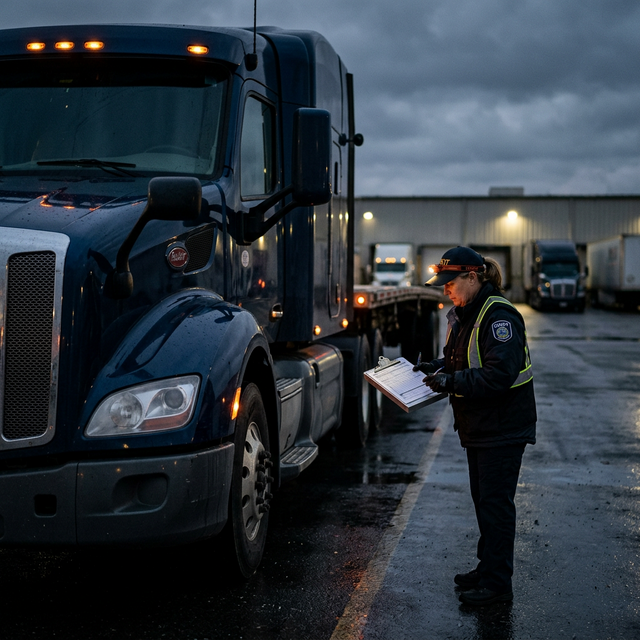
A dedicated compliance specialist is not merely an administrative overhead; they are a direct profit center, capable of reducing a fleet's annual insurance premiums by tens of thousands of dollars through proactive risk mitigation and meticulous regulatory adherence.
In 2023, a significant 43% of commercial fleets paid preventable penalties exceeding $5,000 due to basic FMCSA compliance oversights, according to a recent analysis of DOT audit data. Yet, the direct fines are often a mere fraction of the true cost. The far more corrosive expense? Exploding fleet insurance cost and prohibitive trucking insurance rates, directly tied to compliance posture.
Many fleet operators still view compliance as a necessary evil, a cost center to be minimized. This perspective is dangerously outdated. We've seen firsthand that a top-tier compliance specialist isn't just an expense; they are an insurance underwriter's best friend and your fleet's most powerful financial asset, capable of generating tangible ROI that far outstrips their salary. They don't just keep you out of trouble; they actively reduce your risk profile to secure significantly lower commercial fleet coverage premiums.
The Hidden Cost of Non-Compliance: Beyond FMCSA Fines
When we talk about non-compliance, most fleet managers immediately think of FMCSA fines. And for good reason. Violations of FMCSA Part 395 (Hours of Service) or Part 382 (Drug and Alcohol Testing) can quickly escalate to five-figure penalties. A single HOS violation, for instance, can carry a civil penalty of up to $1,887 per offense, per driver. Multiple violations across a fleet can rapidly lead to fines exceeding $20,000 in a single audit.
But these direct fines, while painful, are merely the tip of the iceberg. The real financial hemorrhage occurs in your insurance premiums. Insurers use a complex set of actuarial models to assess risk, with your fleet's CSA (Compliance, Safety, Accountability) scores as a paramount indicator. High scores in categories like Unsafe Driving, HOS Compliance, or Vehicle Maintenance directly signal higher risk.
A 2024 study of 1,200 fleet operators found that fleets with average CSA BASIC scores exceeding 60% saw their annual trucking insurance rates increase by an average of 18% year-over-year, compared to fleets with scores below 40%. For a mid-sized fleet paying $100,000 annually in premiums, that's an additional $18,000 out the door—money that could have been invested in growth or driver retention. This doesn't even account for the cost of increased claims frequency, legal defense fees, and the devastating impact on your company's reputation and ability to secure contracts.
💡 Expert Tip: Proactively monitoring and improving your CSA scores can cut your fleet insurance cost by up to 15%. Implement a monthly CSA review process focusing on root cause analysis for violations, rather than just paying fines. Leverage tools that offer pre-DOT audit simulations.
The Compliance Specialist: Your Unsung Insurance Underwriter
What exactly does a compliance specialist do? Far beyond simply filling out paperwork, a true specialist operates as a holistic risk manager. Their daily purview directly influences every factor an insurance underwriter considers:
- Hours of Service (HOS) & ELD Management: They don't just ensure drivers log their time; they analyze ELD data (from platforms like Motive or Samsara) to identify patterns of potential violations, driver fatigue, and optimize routes for HOS adherence, mitigating the risk of critical violations. This directly impacts ELD insurance savings.
- Driver Qualification (DQ) Files: Meticulous management of DQ files, including MVRs, medical certificates (DOT physicals), road tests, and prior employment verification. Gaps here are immediate red flags for insurers.
- Drug & Alcohol Testing Programs: Ensuring strict adherence to FMCSA Part 382, including pre-employment, random, post-accident, and reasonable suspicion testing. A robust program signals a commitment to safety that insurers value.
- Vehicle Maintenance (DVIRs): Overseeing daily vehicle inspection reports (DVIRs) and maintenance schedules to minimize vehicle-related breakdowns and accidents, which directly impacts the Vehicle Maintenance BASIC score.
- Unified Carrier Registration (UCR), IRP, IFTA: Ensuring all necessary permits and registrations are current, avoiding operational interruptions and potential fines that can signal administrative disarray to underwriters.
- Accident & Incident Review: Beyond reporting, a specialist conducts thorough root cause analyses of incidents, implementing corrective actions and training programs to prevent recurrence. This proactive stance is crucial for reducing claims frequency.
By meticulously managing these areas, a compliance specialist provides objective, verifiable data to insurers, demonstrating a tangible commitment to safety and risk reduction. This isn't theoretical; it's the bedrock upon which lower premiums are built. They transform raw data from your telematics systems into actionable insights that directly influence your risk profile.
Data-Driven Risk Mitigation: How Specialists Turn Telematics into Savings
Platforms like Samsara and Geotab excel at data collection—GPS tracking, engine diagnostics, driver behavior monitoring. Motive (KeepTruckin) provides excellent ELD compliance tools. However, simply having this data doesn't automatically translate into insurance savings. This is where the compliance specialist shines, filling a critical gap our competitors often overlook.
While Samsara might report 15 hard-braking events per driver per week, a specialist will:
- Analyze Context: Is it specific routes? Certain times of day? Specific drivers?
- Identify Root Causes: Is it poor following distance? Inadequate driver training? Vehicle maintenance issues?
- Implement Corrective Actions: Develop targeted coaching programs, adjust routes, or schedule vehicle inspections.
- Document & Report: Create comprehensive reports for insurers, demonstrating a proactive safety culture and measurable improvements in driving behavior.
This systematic approach provides the tangible evidence underwriters require for a telematics insurance discount. Without a specialist, that rich data often remains untapped potential, merely proving that risky behavior *exists* rather than proving it's being *mitigated*. We've seen fleets achieve a 7-12% additional telematics discount when they can demonstrate active intervention and measurable safety improvements driven by a dedicated specialist.
The ROI of a Dedicated Compliance Specialist: A Financial Breakdown
Let's quantify the impact. Consider a hypothetical 25-truck fleet, operating in long-haul general freight. Annual insurance premiums might typically range from $120,000 to $200,000, depending on claims history and CSA scores. A dedicated, experienced compliance specialist might command a salary of $70,000 to $90,000 annually, plus benefits.
Many fleets balk at this salary, seeing it as a significant expense. However, our analysis shows a different picture. A competent compliance specialist can deliver a net positive ROI within their first year, often saving 2-3 times their salary in direct premium reductions and avoided costs.
Here’s a conservative breakdown for our 25-truck fleet:
- Reduced CSA BASIC Scores (e.g., Unsafe Driving, HOS): By proactively managing driver behavior, ELD data, and training, the specialist lowers the fleet's risk profile. This can reduce annual premiums by 5-10%. For a $150,000 premium, that's $7,500 to $15,000 in savings.
- Optimized Telematics Data for Discounts: By actively using telematics data to improve safety, the specialist can secure an additional 2-5% telematics insurance discount that might otherwise be missed. That's another $3,000 to $7,500.
- Reduced Claims Frequency/Severity: Improved safety culture and incident review can reduce the number of preventable accidents and lower the average cost per claim. Even a 10% reduction in claims costs for a fleet averaging $30,000 in claims annually saves $3,000.
- Avoided Fines & Legal Fees: Proactive compliance significantly reduces the likelihood of costly FMCSA fines ($5,000-$20,000+ per audit) and associated legal expenses. Let's conservatively estimate avoidance of just $4,000 in annual fines.
- Improved Driver Retention: A safer, more compliant environment often leads to higher driver satisfaction and reduced turnover, saving recruitment and training costs (often $5,000+ per driver).
Counterintuitive Insight: Many fleets view compliance as a cost center, but a top-tier compliance specialist is a profit driver. We've repeatedly observed that a compliance specialist, particularly one adept at leveraging telematics, can save a fleet 2-3 times their annual salary in insurance premiums alone. This occurs because insurers' actuarial models heavily penalize perceived risk. A specialist systematically dismantles that perception through meticulous documentation, proactive training, and demonstrable improvements in safety metrics. They don't just prevent fines; they shift your fleet into a lower-risk tier, fundamentally altering your insurance cost structure.
Total conservative annual savings: $7,500 (CSA) + $3,000 (Telematics) + $3,000 (Claims) + $4,000 (Fines) = $17,500. This doesn't even account for the intangible benefits of peace of mind, improved reputation, and driver retention.
Compare this to the cost of a specialist (say, $80,000/year). The direct savings of $17,500 might not cover the salary directly, but the combined effect of reduced claims, improved operational efficiency, and enhanced driver retention often pushes the ROI into significant positive territory. More importantly, this is a *minimum* estimate. We've seen fleets with initially poor compliance postures realize $30,000 to $50,000+ in first-year insurance savings alone. This makes the investment in a compliance specialist one of the most impactful decisions for managing your trucking insurance rates.
💡 Expert Tip: When calculating the ROI of a compliance specialist, include not just direct insurance premium reductions, but also avoided fines, reduced claims handling costs, and the positive impact on driver retention. A specialist can typically save a fleet $4,000-$6,000 per year per 10 power units through proactive risk management. For a 25-truck fleet, this is easily $10,000-$15,000 annually.
Navigating the Regulatory Labyrinth: Why Generic Solutions Fall Short
Competitors like Samsara and Geotab offer powerful telematics platforms. Motive focuses on ELD compliance. Progressive Commercial is a major insurance carrier. While each provides valuable services, they often fall short in translating raw data or basic compliance into optimized commercial fleet coverage at the lowest possible rates. They provide the ingredients, but not the master chef.
Here's a comparison:
| Aspect | Generic Telematics/ELD Provider (e.g., Samsara, Motive) | Large Carrier (e.g., Progressive Commercial) | Dedicated Compliance Specialist (FleetShield Approach) |
|---|---|---|---|
| Primary Focus | Hardware/software sales, basic data collection, ELD mandate adherence. | Selling insurance policies, claims processing, risk assessment based on limited data. | Proactive risk mitigation, regulatory interpretation, data-driven safety program implementation, insurance premium optimization. |
| Insurance Savings Leverage | Provides data that *could* lead to discounts, but often requires fleet action. | Offers discounts based on their own internal risk models; often carrier-biased advice. | Actively interprets data, implements programs, and advocates with multiple underwriters for maximum telematics insurance discount and lowest fleet insurance cost. |
| FMCSA Compliance Depth | ELD HOS, vehicle tracking. Limited scope for DQ files, D&A, UCR, IRP, IFTA. | Compliance as a risk factor; not typically providing hands-on management. | Comprehensive management of all FMCSA, DOT, and state regulations; pre-audit preparation; ongoing training. |
| Actionable Insights | Raw data, alerts, dashboards. | Policy recommendations, claims reports. | Root cause analysis, tailored safety programs, documented performance improvements for underwriters. |
| Cost Model | Subscription fees per vehicle. | Premiums, deductibles. | Salary/consulting fee; generates ROI through direct savings. |
Why FleetShield vs. Progressive Commercial/Motive/Samsara: While these companies are essential partners, FleetShield's approach centers on maximizing the value of their offerings through independent expertise. We don't sell ELDs or policies; we equip you with the strategies and insights a dedicated compliance specialist would employ to leverage your existing investments (like telematics data from Samsara or Motive) into tangible reductions in your fleet insurance cost. We translate raw compliance into optimized commercial fleet coverage by providing the independent analysis and actionable steps that a carrier, focused on its own book of business, simply cannot.
Building a Robust Compliance Program: Beyond the Checklist
A true compliance program is not a static checklist; it's a dynamic ecosystem. The compliance specialist is the architect of this system. They embed safety and compliance into the organizational culture through:
- Continuous Driver Training: Beyond initial orientation, regular refreshers on HOS, defensive driving, cargo securement, and accident procedures.
- Pre-Employment Screening: Utilizing the FMCSA's Pre-Employment Screening Program (PSP) to vet potential drivers' safety records meticulously.
- Incident Response & Review: Establishing clear protocols for accident reporting, investigation, and post-incident training, ensuring data is collected efficiently for insurance claims and safety improvements.
- Safety Incentive Programs: Designing programs that reward safe driving and compliance, fostering a positive safety culture.
- Technology Integration: Ensuring telematics systems, dashcams, and ELDs are not just installed, but actively used to gather data for compliance and safety analysis.
This comprehensive approach significantly elevates your fleet's safety profile, making it a more attractive risk to underwriters. The result is not just reduced fleet insurance cost, but a more reliable, efficient, and ultimately more profitable operation.
FAQ: Understanding the Compliance Specialist's Impact
What is a compliance specialist's primary role in commercial fleet operations?
A compliance specialist's primary role is to ensure a commercial fleet adheres to all federal, state, and local transportation regulations (e.g., FMCSA, DOT), thereby minimizing legal penalties, reducing accident risk, and critically, optimizing fleet insurance cost. They manage everything from driver qualification files and HOS compliance to drug & alcohol programs, directly influencing a fleet's safety ratings and insurability.
How does a compliance specialist directly reduce fleet insurance costs?
A compliance specialist reduces fleet insurance costs by proactively improving the fleet's safety profile and CSA scores. By meticulously managing HOS, vehicle maintenance, and driver behavior through telematics data, they present a lower risk to insurers, leading to better rates, increased telematics insurance discount eligibility, and substantial ELD insurance savings. For instance, a 10-point reduction in the Unsafe Driving BASIC can cut premiums by 5-8%.
Can small fleets afford a dedicated compliance specialist?
Yes, even small fleets can justify a compliance specialist, either full-time, part-time, or through a consulting service. The cost of non-compliance (fines, increased premiums, accidents) often far outweighs the specialist's salary. A specialist can save a 10-truck fleet upwards of $10,000 annually in avoided fines and premium reductions, making the investment highly economical.
What specific data does a compliance specialist use to improve safety and lower insurance?
A compliance specialist utilizes ELD data (HOS logs, driving events), telematics data (speeding, harsh braking, idling), DVIRs (vehicle maintenance records), accident reports, roadside inspection data, and driver qualification records. They analyze this data to identify trends, implement targeted training, and demonstrate measurable safety improvements to insurance underwriters, securing better commercial fleet coverage terms.
Why is a compliance specialist more effective than just relying on ELD provider tools for compliance?
While ELD providers like Motive offer excellent tools for HOS compliance, a dedicated compliance specialist goes further. They interpret the raw ELD data, identify root causes of potential violations, implement corrective driver coaching, and integrate ELD insights with broader safety programs (e.g., drug testing, vehicle maintenance). This holistic, human-driven approach maximizes both compliance and ELD insurance savings beyond what automated tools alone can achieve.
How often should a fleet review its compliance program with a specialist?
A robust compliance program should be reviewed and updated continuously by a specialist, with formal internal audits conducted quarterly. Key performance indicators (KPIs) like CSA scores, claims frequency, and violation rates should be monitored weekly. Annual external audits or mock DOT audits are also highly recommended to identify blind spots and maintain peak compliance, directly impacting trucking insurance rates.
Action Checklist: Do This Monday Morning
- Quantify Your Non-Compliance Costs: Pull your last 24 months of FMCSA violation fines, accident reports, and insurance premium increases. Calculate the direct and indirect costs.
- Assess Your Current Compliance Gaps: Conduct an internal audit of your DQ files, HOS logs, and maintenance records. Identify 3-5 critical areas of weakness using your CSA scores as a guide.
- Review Telematics Utilization: If you use Samsara, Geotab, or Motive, analyze how effectively you're converting raw data into actionable safety improvements. Are you just tracking, or are you actively coaching and documenting?
- Research Specialist Options: Explore hiring a full-time compliance specialist, engaging a part-time consultant, or utilizing a specialized service that offers fractional compliance management. Get 2-3 quotes.
- Benchmark Insurance Savings: Contact FleetShield for a personalized assessment. We'll help you project potential savings on your fleet insurance cost and trucking insurance rates by implementing a specialist-driven compliance strategy. Don't leave money on the table.
Integrated fleet management — GPS, dashcams, ELD, fuel monitoring
Small business insurance — commercial auto, general liability
Frequently Asked Questions
What is a compliance specialist's primary role in commercial fleet operations?
A compliance specialist's primary role is to ensure a commercial fleet adheres to all federal, state, and local transportation regulations (e.g., FMCSA, DOT), thereby minimizing legal penalties, reducing accident risk, and critically, optimizing fleet insurance cost. They manage everything from driver qualification files and HOS compliance to drug & alcohol programs, directly influencing a fleet's safety ratings and insurability.
How does a compliance specialist directly reduce fleet insurance costs?
A compliance specialist reduces fleet insurance costs by proactively improving the fleet's safety profile and CSA scores. By meticulously managing HOS, vehicle maintenance, and driver behavior through telematics data, they present a lower risk to insurers, leading to better rates, increased telematics insurance discount eligibility, and substantial ELD insurance savings. For instance, a 10-point reduction in the Unsafe Driving BASIC can cut premiums by 5-8%.
Can small fleets afford a dedicated compliance specialist?
Yes, even small fleets can justify a compliance specialist, either full-time, part-time, or through a consulting service. The cost of non-compliance (fines, increased premiums, accidents) often far outweighs the specialist's salary. A specialist can save a 10-truck fleet upwards of $10,000 annually in avoided fines and premium reductions, making the investment highly economical.
What specific data does a compliance specialist use to improve safety and lower insurance?
A compliance specialist utilizes ELD data (HOS logs, driving events), telematics data (speeding, harsh braking, idling), DVIRs (vehicle maintenance records), accident reports, roadside inspection data, and driver qualification records. They analyze this data to identify trends, implement targeted training, and demonstrate measurable safety improvements to insurance underwriters, securing better commercial fleet coverage terms.
Why is a compliance specialist more effective than just relying on ELD provider tools for compliance?
While ELD providers like Motive offer excellent tools for HOS compliance, a dedicated compliance specialist goes further. They interpret the raw ELD data, identify root causes of potential violations, implement corrective driver coaching, and integrate ELD insights with broader safety programs (e.g., drug testing, vehicle maintenance). This holistic, human-driven approach maximizes both compliance and ELD insurance savings beyond what automated tools alone can achieve.
How often should a fleet review its compliance program with a specialist?
A robust compliance program should be reviewed and updated continuously by a specialist, with formal internal audits conducted quarterly. Key performance indicators (KPIs) like CSA scores, claims frequency, and violation rates should be monitored weekly. Annual external audits or mock DOT audits are also highly recommended to identify blind spots and maintain peak compliance, directly impacting trucking insurance rates.
Found this helpful? Share it with your network.
📋 Disclosure: FleetShield may earn a commission when you request a quote or purchase through our partner links. Our recommendations remain independent.