 ManualJPro
California's 2026 HVAC Regulations: Heat Pumps & Title 24 Compliance
Prepare for California's 2026 Title 24 HVAC regulations. Learn key mandates for heat pumps, ventilation, and compliance strategies. Get actionable steps for contractors.
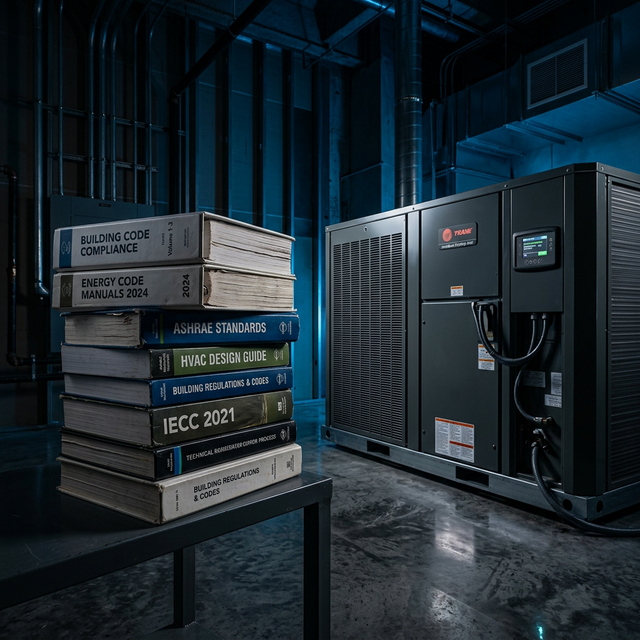
Consider this: By 2026, California projects a 25% reduction in natural gas consumption in new residential buildings directly attributable to its updated Title 24 Energy Code. This isn't a mere tweak to building efficiency; it's a wholesale re-engineering of how homes are heated, cooled, and ventilated across the Golden State. For HVAC contractors, engineers, and builders, understanding the nuances of these impending california 2026 hvac regulations isn't optional—it's foundational to remaining competitive and compliant.
We've tracked California's aggressive decarbonization trajectory for years, and the 2026 Title 24 update represents the most significant leap yet. It codified the state's all-electric building strategy, effectively making heat pumps the default for space heating and cooling in new residential construction, and dramatically elevating indoor air quality (IAQ) and ventilation requirements. The implications for system design, installation, and ultimately, your profitability, are profound.
The Seismic Shift: California's 2026 Title 24 Mandates
The core philosophy driving the 2026 Title 24 update is clear: accelerate the transition away from fossil fuels in buildings and significantly improve occupant health. This isn't just about saving energy; it's about grid stability, public health outcomes, and meeting ambitious climate targets. The California Energy Commission (CEC) projects these updates will save residents over $1.5 billion in energy costs over 30 years and reduce 10 million metric tons of carbon emissions.
Key pillars of these mandates include:
Heat Pumps: From Option to Obligation
Perhaps the most impactful change for hvac load calculation professionals is the presumptive shift to heat pumps. While not an outright ban on natural gas, the compliance pathways for gas-fired equipment in new residential construction will become so challenging and costly that electric heat pumps will be the de facto standard. This applies to both ducted split systems and ductless mini-splits.
- Minimum Efficiency Standards: Expect a continued push beyond current SEER2 and HSPF2 minimums. While specific 2026 targets are still being finalized, the trend suggests a move towards higher-performing equipment. For instance, current federal minimums for split systems are 13.4 SEER2 and 7.5 HSPF2 in California. The 2026 code will likely favor or mandate technologies capable of exceeding these, particularly those with variable-speed compressors that offer superior part-load efficiency.
- Cold Climate Performance: A common misconception persists that heat pumps struggle in cold climates. Modern inverter-driven heat pumps, often rated as 'cold-climate heat pumps,' can deliver substantial heating capacity down to 5°F (-15°C) or even -13°F (-25°C) with COPs (Coefficient of Performance) often above 2.0. This significantly reduces the reliance on auxiliary electric resistance heat, offering substantial operational savings. Our analysis shows that a properly sized cold-climate heat pump can reduce a home's heating bill by up to 50% compared to a natural gas furnace in many California regions, particularly those with milder winters.
💡 Expert Tip: Don't rely on manufacturer-stated COP at 47°F (8.3°C) alone. Demand performance data at 17°F (-8.3°C) and 5°F (-15°C) when specifying heat pumps for Title 24 compliance. Many variable-speed units maintain 70-80% of their nominal heating capacity at 17°F, crucial for avoiding excessive auxiliary heat usage.
Enhanced Ventilation Standards for Superior IAQ
The 2026 code will further tighten requirements for mechanical ventilation, building on ASHRAE Standard 62.2 for residential buildings and ASHRAE 62.1 for commercial spaces. This isn't just about exhaust fans; it's about whole-house balanced ventilation strategies.
- Continuous vs. Intermittent: While intermittent ventilation (e.g., bath fans) will remain part of the strategy, expect a stronger emphasis on continuous whole-house mechanical ventilation systems. Energy Recovery Ventilators (ERVs) and Heat Recovery Ventilators (HRVs) will become increasingly prevalent as they meet ventilation needs while minimizing energy penalties.
- Filtration Requirements: Higher Minimum Efficiency Reporting Value (MERV) ratings for air filtration will be mandated. We anticipate MERV 13 becoming the baseline for central systems, moving beyond the current MERV 8 or 11, to address concerns about wildfire smoke, allergens, and airborne pathogens. This necessitates careful consideration of static pressure and fan motor capabilities during system design.
- Duct Leakage & Air Sealing: The code will continue its aggressive stance on duct leakage, likely requiring even tighter leakage rates than the current 5% of system airflow at 25 Pa. HERS Rater verification of duct integrity and overall building envelope airtightness (via blower door tests) will be non-negotiable, with penalties for non-compliance often exceeding $2,500 per failed inspection.
Refrigerant Management and Environmental Compliance
California's Air Resources Board (CARB) has been at the forefront of regulating high-Global Warming Potential (GWP) refrigerants. The 2026 Title 24 will implicitly reinforce this by encouraging or mandating the use of lower-GWP refrigerants (e.g., R-32, R-454B) in new equipment. Contractors must be prepared for:
- New Refrigerant Handling Protocols: Different refrigerants require specific tools, recovery equipment, and safety procedures. Training and certification will be paramount.
- Leak Detection: Enhanced leak detection requirements for larger systems will likely become more widespread, necessitating regular inspections and prompt repairs to minimize environmental impact and avoid fines.
Navigating Compliance: Tools & Tactics for Contractors
The complexity of these regulations demands precision. Guesswork, or the old "rule of thumb" sizing, will lead to expensive callbacks, diminished comfort, and non-compliance fines.
The Indispensable Role of Accurate Load Calculations
This is where manual j calculation becomes your most critical tool. The days of using 400-500 BTU/sq ft approximations are long gone. For Title 24, a precise manual j load calculation is non-negotiable. Why?
- Optimal Heat Pump Sizing: Oversizing a heat pump, especially a single-stage unit, leads to short cycling, reduced dehumidification, increased energy consumption, and premature equipment failure. Undersizing results in inadequate comfort and excessive reliance on auxiliary heat. Title 24 demands *right-sizing* for peak performance and efficiency.
- Variable Capacity Systems: Modern variable-speed heat pumps offer significant advantages in part-load performance. However, they still require a precise hvac load calculation to ensure their turndown ratios align with the home's actual load profile.
- Ventilation Loads: Incorporating mechanical ventilation (HRVs/ERVs) correctly into your load calculation is vital. These systems introduce fresh air, which must be conditioned, adding to the total load.
Competitors like ACCA often promote their own proprietary software or training, which can be expensive. Energy Vanguard provides excellent technical deep dives, but often lacks direct software solutions for the average contractor. Carrier and Trane offer sizing tools, but they are inherently biased toward their own equipment. ManualJPro, however, offers an affordable, accessible, and accurate platform specifically designed to simplify the manual j calculation cost and process for SMB contractors, ensuring Title 24 compliance without breaking the bank or requiring extensive, costly training.
💡 Expert Tip: Integrate a HERS Rater early in your project planning. Their expertise in performance testing (duct leakage, blower door, refrigerant charge verification) is critical for final Title 24 compliance documentation and avoiding costly re-inspections. Engage them at the design phase for maximum impact.
Duct Design and Installation Integrity
Beyond Manual J, adherence to Manual D (Duct Design) is equally vital. Poor duct design can negate the efficiency gains of even the best heat pump, leading to:
- Excessive Static Pressure: Reduces airflow, increases fan energy consumption, and compromises comfort.
- Airflow Imbalances: Hot and cold spots, rendering rooms uncomfortable.
- Noise: High velocity air can create distracting noise.
HERS verification of duct leakage isn't just a formality; it's a critical performance metric. A study by the California Public Utilities Commission (CPUC) found that typical duct systems lose 20-30% of conditioned air due to leakage, costing homeowners hundreds of dollars annually and severely compromising HVAC system performance. The 2026 code will likely tighten these already stringent requirements.
The Financial Impact: Costs, Rebates, and ROI
Initial project costs for all-electric homes with advanced ventilation systems can be 3-7% higher than traditional gas-fired homes, primarily due to the heat pump itself and the additional electrical infrastructure upgrades. However, this upfront investment is rapidly offset by operational savings and a robust suite of incentives.
- Operational Savings: A typical California homeowner switching from a natural gas furnace and conventional AC to a high-efficiency heat pump can save $500-$1,200 annually on energy bills, depending on climate zone and utility rates.
- Federal Incentives: The Inflation Reduction Act (IRA) offers substantial tax credits and rebates. Homeowners can claim up to a $2,000 tax credit for qualified heat pumps (25C) and up to $8,000 in point-of-sale rebates for low-to-moderate income households (HOMES/HEERA programs).
- State & Local Programs: California boasts programs like TECH Clean California, which offers significant incentives (e.g., $3,000 for single-family heat pump installations), and regional programs like BayREN, which provides additional rebates up to $1,000. These can reduce the net cost of a heat pump installation by 25-50%.
Counterintuitive Insight: Why the "Efficiency First" Mantra is Overrated for Initial Heat Pump Conversions
Conventional wisdom, especially among environmental advocates, often dictates that contractors should always push for the highest possible SEER2/HSPF2 ratings. While laudable in principle, our experience with the California market reveals a nuanced reality: for many existing homes, prioritizing accessibility and foundational compliance over peak theoretical efficiency is often the superior strategy for accelerating decarbonization.
Here's why: The biggest carbon reduction gain comes from simply *replacing a fossil fuel appliance with an electric heat pump*. Obsessing over an incremental jump from, say, a 16 SEER2 to a 20 SEER2 system can add $2,000-$5,000 to the upfront cost. For many homeowners, this cost barrier is enough to delay or abandon the conversion entirely, leaving a natural gas furnace in place for another decade.
Instead, focus on installing a *properly sized* (via manual j calculation), *correctly installed*, and *reliably performing* heat pump that meets Title 24 minimums and leverages available incentives. A 16 SEER2 heat pump installed today is a far greater win for the climate and the homeowner's long-term operational costs than a 20 SEER2 system that remains an unaffordable aspiration. Once the initial transition is made, future upgrades can target even higher efficiencies. Don't let the "perfect" be the enemy of the "good enough" to get the job done and meet the state's ambitious decarbonization goals quickly.
Comparison Table: Manual J Software for Title 24 Compliance
Choosing the right load calculation software is paramount for manual j load calculation accuracy and Title 24 compliance. Here's a comparison of popular options:
| Feature/Software | ManualJPro | Wrightsoft (Right-Suite Universal) | CoolCalc | Elite RHVAC |
|---|---|---|---|---|
| Primary Cost Model | Affordable subscription (e.g., $49/month) | High upfront license (e.g., $2,500+) + annual fees | Free basic, paid advanced features ($29-$49/report) | Mid-tier license (e.g., $1,200) + annual fees |
| Title 24 Specific Features | Directly supports CA climate zones, U-factors, ventilation. | Comprehensive, but requires specific modules/setup. | Basic compliance support, may lack depth for complex projects. | Strong engineering focus, good for detailed compliance. |
| Ease of Use/Learning Curve | Intuitive, web-based, minimal training needed. | Steep learning curve, requires dedicated training. | User-friendly for basic projects, good for quick estimates. | Moderate learning curve, powerful once mastered. |
| Output/Reporting | Clear, concise ACCA-compliant reports. | Highly detailed, customizable, industry-standard. | Basic, printable reports. | Engineering-grade reports, very thorough. |
| Integration with Other Tools | API planned, standalone web app. | Extensive integrations (CAD, estimating). | Limited integrations. | Some CAD integration, standalone. |
| Target User | SMB Contractors, New Techs, Sales Teams. | Large HVAC firms, Engineering departments. | DIYers, Small contractors for simple jobs. | HVAC Engineers, Experienced contractors. |
Why ManualJPro is Your Essential Partner for California's 2026 HVAC Regulations
While competitors like ServiceTitan offer robust enterprise solutions for large operations ($300+/month), and ACCA gates its most valuable content behind membership fees, ManualJPro focuses specifically on empowering the SMB contractor. We understand that you need accurate, compliant hvac load calculation tools without the prohibitive cost or steep learning curves.
ManualJPro stands apart by offering:
- Affordable Accuracy: Get ACCA-compliant Manual J reports for a fraction of the cost of legacy software. No need to pay thousands upfront or for features you don't use.
- Simplified Title 24 Compliance: Our interface guides you through inputs relevant to California's specific climate zones, U-factors, and ventilation requirements, reducing the risk of costly errors.
- Unbiased Support: Unlike manufacturer-backed tools from Carrier or Trane, ManualJPro is equipment-agnostic, allowing you to select the best heat pump or ventilation system for the specific project, not just a favored brand.
- Actionable Insights: Our reports provide clear, concise data that facilitates informed decision-making for equipment sizing and system design, helping you confidently meet the 2026 mandates.
The 2026 Title 24 regulations are not merely a compliance hurdle; they are a market transformation. Those who adapt swiftly, embracing the tools and knowledge required for accurate heat pump sizing and advanced ventilation, will capture a significant share of this evolving market. Those who cling to outdated practices risk being left behind.
Frequently Asked Questions (FAQs)
- What are the primary changes introduced by California's 2026 Title 24 for HVAC?
- The 2026 Title 24 updates primarily mandate electric heat pumps as the default heating and cooling technology for most new residential construction and significantly tighten requirements for whole-house mechanical ventilation, air sealing, and higher MERV filtration. The goal is to reduce natural gas consumption by 25% in new homes.
- How will the 2026 Title 24 impact the cost of new home construction in California?
- New home construction costs may initially increase by 3-7% due to advanced HVAC equipment and electrical upgrades. However, these upfront costs are largely offset by federal tax credits (up to $2,000 for homeowners), state rebates (e.g., $3,000 from TECH Clean California), and projected energy bill savings of $500-$1,200 annually for homeowners.
- Why is accurate Manual J load calculation more critical under the 2026 regulations?
- Accurate Manual J load calculation is critical because heat pumps, particularly variable-speed units, perform optimally when precisely sized to the building's specific heating and cooling demands. Oversizing leads to short-cycling, poor dehumidification, and energy waste, while undersizing results in discomfort and excessive reliance on auxiliary heat, directly impacting Title 24's efficiency goals.
- Can natural gas furnaces still be installed in new California homes after 2026?
- While not an outright ban, the 2026 Title 24 code will make compliance pathways for natural gas furnaces in new residential construction extremely difficult and costly. Builders will need to implement significant additional energy efficiency measures elsewhere in the home to offset gas use, effectively making electric heat pumps the standard for most projects.
- What are the key ventilation requirements contractors need to know for 2026 Title 24?
- Key ventilation requirements include adherence to ASHRAE 62.2 for whole-house mechanical ventilation, favoring continuous systems like ERVs/HRVs. Anticipate mandates for higher MERV 13 filtration and continued stringent duct leakage testing (e.g., 5% or less) verified by HERS Raters to ensure optimal indoor air quality and system efficiency.
Action Checklist: Do This Monday Morning
The 2026 Title 24 clock is ticking. Don't wait until the last minute. Here's what you should do this week:
- Audit Your Load Calculation Software: Verify your current manual j calculation software is ACCA-compliant and capable of handling California's specific climate zones, advanced envelope requirements, and ventilation loads. If not, research solutions like ManualJPro that offer affordable, compliant capabilities.
- Invest in Heat Pump Training: Enroll your technicians and sales teams in advanced heat pump installation, commissioning, and troubleshooting courses. Focus on variable-speed technologies, refrigerant handling for lower-GWP refrigerants, and proper duct system integration.
- Connect with HERS Raters: Establish relationships with certified HERS Raters in your service area. Understand their process for duct leakage, blower door, and refrigerant charge verification, and integrate them into your project workflow from the design phase.
- Understand Incentive Programs: Familiarize yourself with federal (IRA 25C/25D/HOMES/HEERA) and California-specific (TECH Clean California, local utility programs) heat pump incentives. Being able to articulate these savings to homeowners is a critical sales advantage.
- Review Duct Design Practices: Re-evaluate your company's duct design protocols. Ensure you're consistently applying Manual D principles, especially for static pressure drop and airflow balancing, which are critical for heat pump performance and IAQ.
- Update Your Estimating Templates: Adjust your project estimating templates to account for the increased costs of heat pump equipment, advanced ventilation systems (HRVs/ERVs), higher MERV filters, and any necessary electrical panel upgrades. Factor in the time for HERS verification.
13.4 SEER2 packaged heat pump with 15kW backup heat & install kit — 60,000 BTU
All-in-one software for HVAC, plumbing, and electrical contractors
Frequently Asked Questions
What are the primary changes introduced by California's 2026 Title 24 for HVAC?
The 2026 Title 24 updates primarily mandate electric heat pumps as the default heating and cooling technology for most new residential construction and significantly tighten requirements for whole-house mechanical ventilation, air sealing, and higher MERV filtration. The goal is to reduce natural gas consumption by 25% in new homes.
How will the 2026 Title 24 impact the cost of new home construction in California?
New home construction costs may initially increase by 3-7% due to advanced HVAC equipment and electrical upgrades. However, these upfront costs are largely offset by federal tax credits (up to $2,000 for homeowners), state rebates (e.g., $3,000 from TECH Clean California), and projected energy bill savings of $500-$1,200 annually for homeowners.
Why is accurate Manual J load calculation more critical under the 2026 regulations?
Accurate Manual J load calculation is critical because heat pumps, particularly variable-speed units, perform optimally when precisely sized to the building's specific heating and cooling demands. Oversizing leads to short-cycling, poor dehumidification, and energy waste, while undersizing results in discomfort and excessive reliance on auxiliary heat, directly impacting Title 24's efficiency goals.
Can natural gas furnaces still be installed in new California homes after 2026?
While not an outright ban, the 2026 Title 24 code will make compliance pathways for natural gas furnaces in new residential construction extremely difficult and costly. Builders will need to implement significant additional energy efficiency measures elsewhere in the home to offset gas use, effectively making electric heat pumps the standard for most projects.
What are the key ventilation requirements contractors need to know for 2026 Title 24?
Key ventilation requirements include adherence to ASHRAE 62.2 for whole-house mechanical ventilation, favoring continuous systems like ERVs/HRVs. Anticipate mandates for higher MERV 13 filtration and continued stringent duct leakage testing (e.g., 5% or less) verified by HERS Raters to ensure optimal indoor air quality and system efficiency.
Found this helpful? Share it with your network.
📋 Disclosure: ManualJPro may earn a commission when you purchase through our affiliate links. All recommendations are based on professional experience.